Paintless dent repair: what it fixes and what it can’t
Paintless dent repair, or PDR, reshapes a dented panel back to its original form without filler, sanding or paint, so your car keeps its existing paint. It suits many dings, creases and hail dents, as long as the paint isn’t cracked.
Can it fix my dent?
Usually, yes, as long as the paint isn’t cracked or chipped. What decides it is the paint and any earlier repairs, how far the metal has stretched, and whether the back of the dent can be reached. Send photos and we’ll tell you.
What is paintless dent repair?
Paintless dent repair, or PDR: fixing a dent by working the metal back into shape, mostly from behind the panel with steel rods and sometimes from the front with glue-on tabs, so the original paint stays and no filler, sanding or repainting is needed. It works when the paint is unbroken and the metal hasn’t been stretched too far.
Usually, yes
- Door dings
- Shopping trolley and car-park dents
- Creases
- Hail damage
- Minor panel dents
Not the right repair
- Cracked or chipped paint
- Filler under the paint from an earlier repair
- Torn or badly stretched metal
- Severe or structural damage
If paintless dent repair isn’t right for your car, we’ll tell you.
Dents it suits
Each kind of dent is read the same way, but worked differently. A crease needs the most patience.
What is a crease?
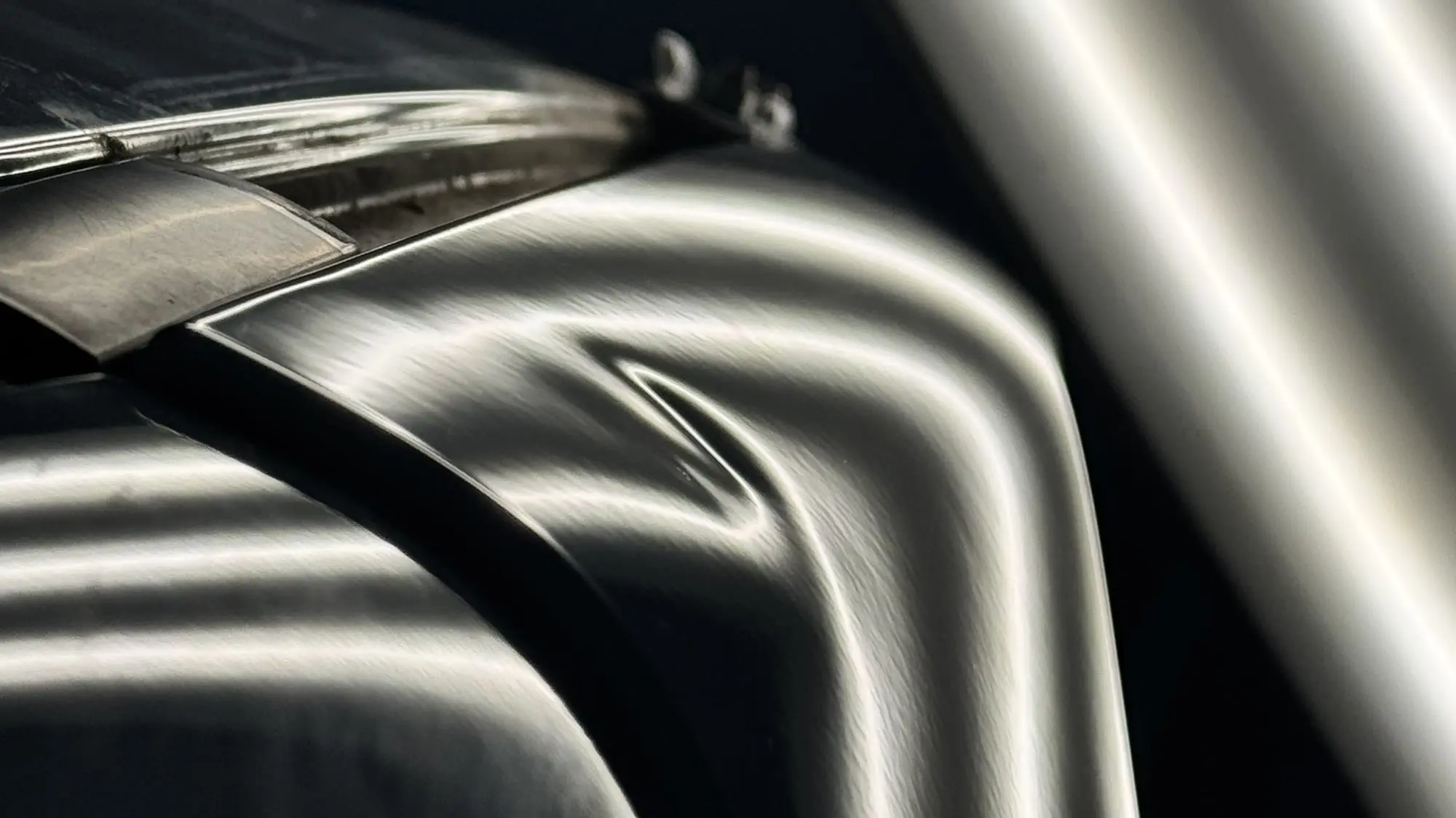
Crease: a long, narrow dent, like a line pressed into the panel, often from another car’s bumper. Soft creases usually repair well; a sharp crease has stretched the metal more and is harder to remove completely.
Door dings
Small, round dents from another car’s door in a car park. Usually shallow, and among the most common repairs. Where the door’s bracing allows, they are pushed out from behind the panel.
Shopping trolley and car-park dents
Low dents along the doors and rear quarters from trolleys, bollards and bumps in car parks. They are often longer or sharper than a door ding, so they can take more care.
Creases
A long, narrow dent: a line pressed into the panel, often by another car’s bumper. A crease is read along its whole length in the line board and worked out gradually along it. Soft creases usually come out well. We take on sharp creases too, though a sharp crease has stretched the metal more and may improve rather than disappear.
Dents near panel edges
Dents close to the edge of a door, bonnet or guard, where the metal is folded over and stiffer. They are harder to reach and slower to work, and we take them on.
Aluminium panels
Some bonnets, guards and tailgates are aluminium. It is harder to work than steel and stretches more easily, so the repair takes more care and time. We take it on.
Minor panel dents
Dents from knocks, falling objects or a light bump, on any panel, as long as the paint is intact and the metal isn’t overly stretched.
Roof and bonnet dents
Large, flat panels show every dent in their reflection. They are reached from behind, through the panel’s openings or by lowering the headlining, or lifted from the front where there’s no way in.
Hail damage
Many dents across several panels, each worked out in turn. Hail damage repair, with or without an insurance claim
Cant railCrease, traced
How it’s done
A line board is set up so its lines reflect in the paint, and a dent bends them. We push the metal out from behind, a little at a time, watching each press in the reflection, and bring down any spot that rises too high with a knockdown.
The work goes back and forth until the lines run as straight across the repair as across the paint around it. Where a rod can’t reach behind the panel, we lift the dent from the front by glue pulling, on original paint, and we warm the panel where the paint or the glue needs it.
To get behind a dent we use the car’s own openings, or take off trim or lights and refit them afterwards. We never drill holes to reach a dent.
What is a line board?
Line board: a light panel striped with dark lines, set on a stand or on the car so the lines reflect in the paint. A dent bends the reflected lines, and the tip of the tool shows in them before each press. The repair is finished when the lines look the same over it as over the undamaged paint around it.
What is a push?
Push: pressing the dented metal back out from behind with a steel rod levered against the car’s inner structure, in many small, even presses, each one watched in the reflection.
What is a knockdown?
Knockdown, or tap-down: a small punch with a plastic or nylon tip, held on a spot that has risen too high and tapped with a light hammer to bring it level with the panel. Pushing and tapping down go back and forth until the panel is flat.
What is glue pulling?
Glue pulling: lifting a dent from the outside with a plastic tab hot-glued to the paint and pulled with a hand lifter or slide hammer. The tab comes off with alcohol, and any spot pulled too high is tapped down. It’s used where a rod can’t reach behind the panel, or to bring a large dent up quickly, and it’s safest on original factory paint.
A drawing, not a photograph.
Compared with a panel shop
A panel shop fills, sands and repaints the damaged area, a respray. Paintless dent repair works the metal itself and leaves the paint alone. Where the paint is cracked, the metal is torn or badly stretched, or there’s filler under the paint from an earlier repair, a panel shop is the right repair, and we’ll say so.
What is a respray?
Respray: repainting a panel, usually after the dent has been filled with body filler (bog), sanded and primed, with the new paint matched to the rest of the car. Paintless dent repair avoids it when the original paint is unbroken.
Paintless dent repair
- No filler, sanding or paint
- The existing paint is kept
- Done at your home or work
- Many repairs done while you wait
Panel and paint repair
- Filler, sanding and a respray
- New paint matched to the old
- Done in a workshop
- Needed for cracked paint or severe damage
What to photograph for a quote
We come to you across the Gold Coast and Tweed. A photo with the panel’s reflection in it shows the dent best.
Questions
- What damage can it fix?
- Dings, dents, creases and hail damage, as long as the paint isn’t cracked or damaged. If the paint is cracked, the dent may still be worked out first and the panel then prepared for paint.
- Can it repair deep or large dents?
- Size alone doesn’t rule a dent out: its depth, how sharp it is and where it sits on the panel matter more. Many large dents can be repaired if the paint is intact and the metal isn’t overly stretched. Send photos and we’ll tell you.
- Do you drill holes to reach a dent?
- No. We reach the back of a dent through the car’s own openings, or by taking off trim or lights and refitting them. Where a rod can’t reach, we lift the dent from the front with glue-on tabs.
- Will it damage my paint?
- Original factory paint is flexible enough to follow the metal as it’s worked back gradually, so it’s kept. The risk is paint that was already cracked, or a panel that has been resprayed or filled before, so tell us about any earlier repairs.
- Will I be able to see where the dent was?
- The aim is no visible sign of repair: the panel reflects light the same way as the paint around it. Most dents that suit the repair get there. A sharp crease or stretched metal may improve a lot without disappearing completely. Send photos and we’ll tell you what to expect.
- Will the dents come back?
- No. Once repaired, a dent won’t return unless the car is damaged again.
- Can it be done on any car?
- On most passenger vehicles and motorcycles, as long as the damage suits the repair and the paint is intact. Most trucks (semis), buses and machinery don’t suit it.
- Does it work on aluminium panels?
- Yes, but aluminium is harder to work than steel and stretches more easily, so the repair can take longer and cost more.
- Does it work on cars with aftermarket paint?
- It depends on the paint. A resprayed panel is more likely to crack than factory paint, and glue used to lift a dent can pull it off. Tell us about it when you send photos.
Send a photo of the dent. We’ll quote from it.
Two or three photos from different angles, and one of the whole panel. Daylight or shade works best. We come to you across the Gold Coast and Tweed.
Page last checked .